
This guide contains affiliate links. If you buy through them, we may earn a commission at no extra cost to you. As an Amazon Associate, Your Prio earns from qualifying purchases. Educational content only, not medical advice.
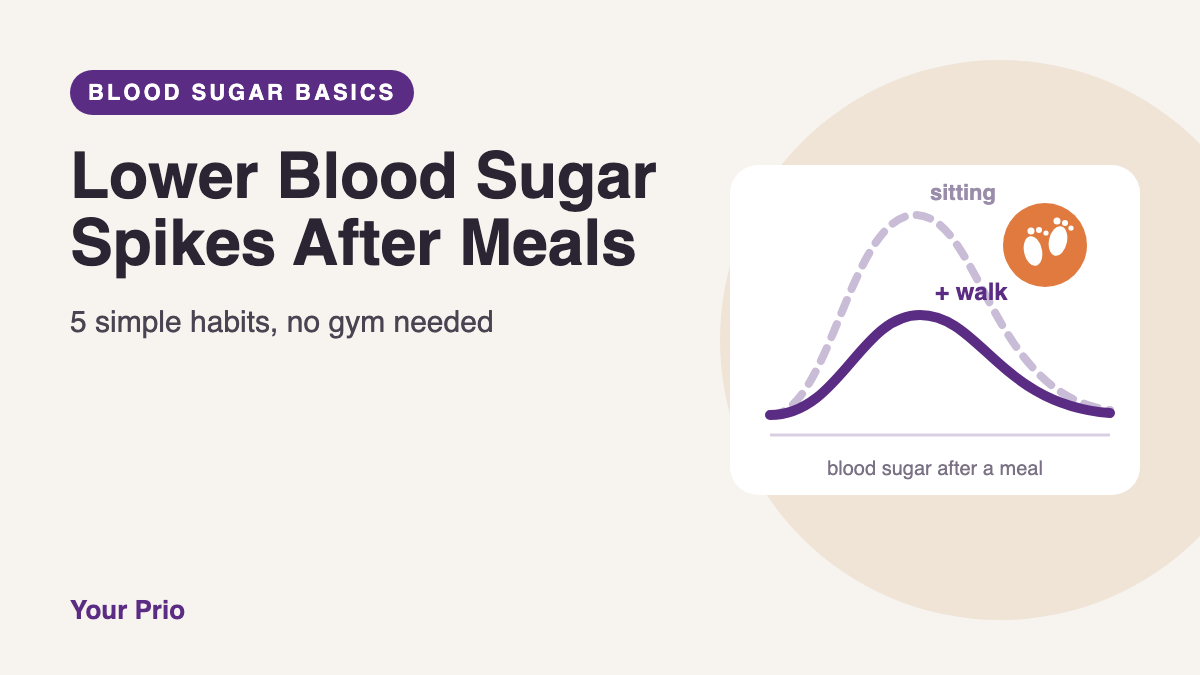
Short answer: you can soften blood sugar spikes after meals with a few free habits: take a short walk after eating (even 2 to 5 minutes helps), eat your vegetables and protein before your carbs, add fiber, and don’t skip sleep. These habits support healthy blood sugar for most adults. If you have diabetes or prediabetes, or take medication that lowers blood sugar, talk to your doctor before changing your routine.
Our quick picks
| Product | Helps with | Why we like it |
|---|---|---|
| Fitbit Inspire 3 | Remembering to move after meals | Simple tracker with move reminders |
| Walking pad (under-desk treadmill) | Walking at home in any weather | Slides under a bed or sofa |
| Psyllium fiber (e.g., Metamucil) | Adding soluble fiber | One of the most studied fiber supplements |
| Divided meal-prep containers | Building “veggies first” plates | Makes portions and order easy |
Why blood sugar spikes matter after 50
After a meal with carbohydrates, blood sugar rises and then falls. As we get older, the body often becomes less sensitive to insulin, so those rises can get bigger. Over time, frequent high spikes are linked to a higher risk of type 2 diabetes. The habits below don’t require a gym, a special diet or expensive supplements.
5 habits that help
1. Walk after you eat
A review of studies found that even 2 to 5 minutes of light walking after a meal lowered the blood sugar rise compared with sitting (Buffey et al., Sports Medicine, 2022). In a study of people with type 2 diabetes, a 10-minute walk after each meal worked better than one 30-minute walk at another time of day (Reynolds et al., Diabetologia, 2016).
2. Eat your carbs last
Same food, different order: in a small study, eating vegetables and protein first and the carbs last led to a noticeably lower blood sugar rise after the meal (Shukla et al., Diabetes Care, 2015).
3. Add fiber
Fiber, especially soluble fiber from oats, beans, lentils, vegetables and psyllium, slows how fast sugar reaches the blood. Most adults eat much less fiber than recommended.
4. Don’t skip protein at breakfast
A breakfast with protein (eggs, Greek yogurt, cottage cheese) keeps you fuller and helps avoid a sugary mid-morning snack.
5. Protect your sleep
Short or poor sleep can make the body less sensitive to insulin the next day. See our 7 sleep habits after 50.
Tools that make these habits easier
1. Fitbit Inspire 3: a gentle reminder to move
A slim, affordable tracker that counts steps and can remind you to move each hour. Handy for building the after-meal walk habit.
- Pros: long battery life; simple; comfortable.
- Cons: some advanced features need a paid subscription.
2. Walking pad: walk at home after dinner
A flat, compact treadmill for slow walking. Useful when it’s dark, cold or rainy after dinner.
- Pros: folds or slides away; quiet; great for 5 to 10 minute walks.
- Cons: low top speed; not for running; check the weight limit.
3. Psyllium fiber: an easy fiber boost
Psyllium husk is a soluble fiber with a long research record for digestive health and cholesterol, and some studies show benefits for blood sugar. Choose an unflavored or sugar-free version, start small and drink plenty of water. Take it at least 2 hours apart from medications, and ask your doctor first if you take diabetes medicine.
- Pros: inexpensive; well studied; easy to mix.
- Cons: can cause bloating at first; flavored versions may contain sugar.
4. Divided meal-prep containers: build a better plate
Containers with sections make it easy to fill half with vegetables, a quarter with protein and a quarter with carbs, and to eat them in that order.
- Pros: helps with portions; good for lunches.
- Cons: choose glass or BPA-free plastic.
What about supplements for blood sugar?
Many supplements promise to “balance blood sugar”. Be careful: the evidence for most of them is weak, and some can interact with diabetes medication. Use our free Label Check guide before you buy, and always talk to your doctor first.
FAQ
How long should I walk after eating?
Even 2 to 5 minutes helps. 10 to 15 minutes is a great goal, ideally within 30 minutes after the meal.
Does the order I eat food really matter?
Small studies suggest yes: eating vegetables and protein before carbs led to a lower blood sugar rise.
Should I get a glucose monitor?
Some continuous glucose monitors are now sold without a prescription. They can be interesting, but talk to your doctor about whether one makes sense for you and how to read the results.
Written by Adriana Miranda, Your Prio. We are not the manufacturers of these products. Product details and prices can change, so always check the current label and price on the seller’s site. Talk to your doctor before starting any new supplement or exercise program.
Sources: Buffey AJ et al., The Acute Effects of Interrupting Prolonged Sitting Time in Adults with Standing and Light-Intensity Walking on Biomarkers of Cardiometabolic Health, Sports Medicine (2022); Reynolds AN et al., Diabetologia (2016); Shukla AP et al., Food Order Has a Significant Impact on Postprandial Glucose and Insulin Levels, Diabetes Care (2015); CDC, Prediabetes. These statements have not been evaluated by the Food and Drug Administration. This content is not intended to diagnose, treat, cure or prevent any disease.
Leave a Reply